
- Introduction
Choosing a preschool isn’t just about location or convenience—it’s about finding a program that matches your child’s personality and learning style. Preschools often follow specific teaching philosophies, each with its own approach to fostering cognitive, social, and emotional development.
From the structured independence of Montessori to the creativity-driven Reggio Emilia method, understanding these philosophies can help you make an informed decision. There’s no one-size-fits-all approach, but some methods may better match your family’s values and goals.
In this article, we’ll explore the most common preschool teaching philosophies, their key characteristics, and their benefits and drawbacks. By the end, you’ll have a clearer sense of which philosophy might be the best fit for your child.
- Montessori: Fostering Independence and Self-Directed Learning
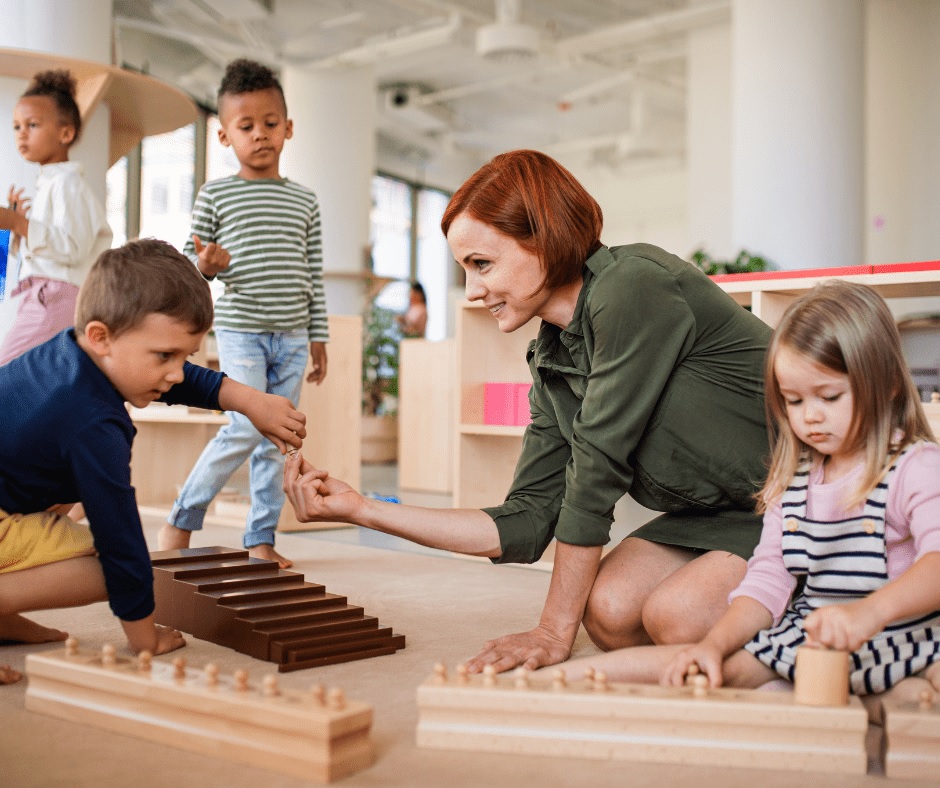
The Montessori method, developed by Dr. Maria Montessori in the early 20th century, emphasizes independence, hands-on learning, and self-paced exploration.
Key Characteristics:
- Child-centered classrooms where children choose their activities from a variety of carefully designed materials.
- Mixed-age groups that encourage peer learning and mentorship.
- Teachers guide rather than instruct, stepping in when needed.
Benefits:
- Promotes independence, self-discipline, and intrinsic motivation.
- Encourages deep concentration and problem-solving skills.
- Supports individualized learning, allowing children to progress at their own pace.
Drawbacks:
- May not suit children who thrive in highly structured environments.
- Limited emphasis on group activities and social interaction compared to other methods.
Montessori programs are ideal for independent, self-motivated learners who enjoy exploring the world around them. If your child thrives in a structured yet flexible environment, this approach could be a great fit.
- Reggio Emilia: Inspiring Creativity and Collaboration
The Reggio Emilia approach, originating in Italy, focuses on child-led learning, creativity, and collaboration.
Key Characteristics:
- Projects and activities emerge from children’s interests and curiosities.
- Emphasis on art, storytelling, and hands-on exploration.
- Strong focus on community involvement and parent participation.
Benefits:
- Encourages creativity, critical thinking, and communication skills.
- Builds strong relationships through collaborative projects.
- Celebrates individuality and fosters a love of learning.
Drawbacks:
- Less structured, which may not suit children who need clear routines.
- Requires significant parental involvement, which may not be feasible for all families.
Reggio Emilia is great for creative kids who love art and storytelling. If your child loves asking questions and exploring new ideas, this philosophy could inspire their growth.
- Play-Based Learning: Balancing Fun and Education
Play-based learning is one of the most widely used approaches in preschools today, emphasizing fun, exploration, and discovery.
Key Characteristics:
- Activities are centered around play, whether structured (e.g., puzzles, games) or unstructured (e.g., imaginative play, sensory bins).
- Focus on developing cognitive, social, and emotional skills through hands-on experiences.
- Teachers guide play while allowing children to take the lead.
Benefits:
- Builds foundational skills like problem-solving, language development, and social awareness.
- Instills a lifelong love of learning by making education enjoyable.
- Supports diverse learning styles and developmental stages.
Drawbacks:
- May lack the academic rigor some parents seek for kindergarten readiness.
- Requires skilled teachers to balance play with intentional learning outcomes.
Play-based programs are ideal for children who learn best through hands-on experiences and thrive in dynamic, engaging environments.
- Traditional Academic Programs: Preparing for Structured Learning
Traditional academic preschools focus on preparing children for elementary school through structured lessons and skill-building activities.
Key Characteristics:
- Emphasis on reading, writing, math, and other foundational academic skills.
- Teacher-directed instruction with clear routines and schedules.
- Regular assessments to track progress.
Benefits:
- Provides a strong foundation for kindergarten and beyond.
- Helps children adapt to structured environments.
- Appeals to parents seeking measurable academic outcomes.
Drawbacks:
- May feel rigid or restrictive for creative, free-spirited learners.
- Limited opportunities for unstructured play and exploration.
Traditional programs are best suited for children who thrive in structured settings and benefit from direct instruction. If academic readiness is your priority, this approach may align with your goals.
- How to Choose the Right Philosophy for Your Child
Not sure which philosophy is best? Here are some tips to help you decide:
- Consider Your Child’s Personality:
Does your child enjoy independence (Montessori), creativity (Reggio Emilia), hands-on exploration (play-based), or structure (traditional)? - Align with Family Values:
What are your priorities—academic readiness, social-emotional growth, or fostering creativity? - Visit Multiple Programs:
Observe classrooms and talk to teachers to see which environment feels most supportive and nurturing. - Trust Your Instincts:
Ultimately, you know your child best. Choose a program that feels like the right fit for their unique needs.
- Conclusion
Understanding different preschool teaching philosophies empowers you to make an informed decision about your child’s education. Whether you’re drawn to the independence of Montessori, the creativity of Reggio Emilia, the balance of play-based learning, or the structure of traditional programs, the best choice is one that aligns with your child’s personality and your family’s values.
At the end of the day, preschool should spark curiosity, build confidence, and prepare your child for a lifetime of learning.
